
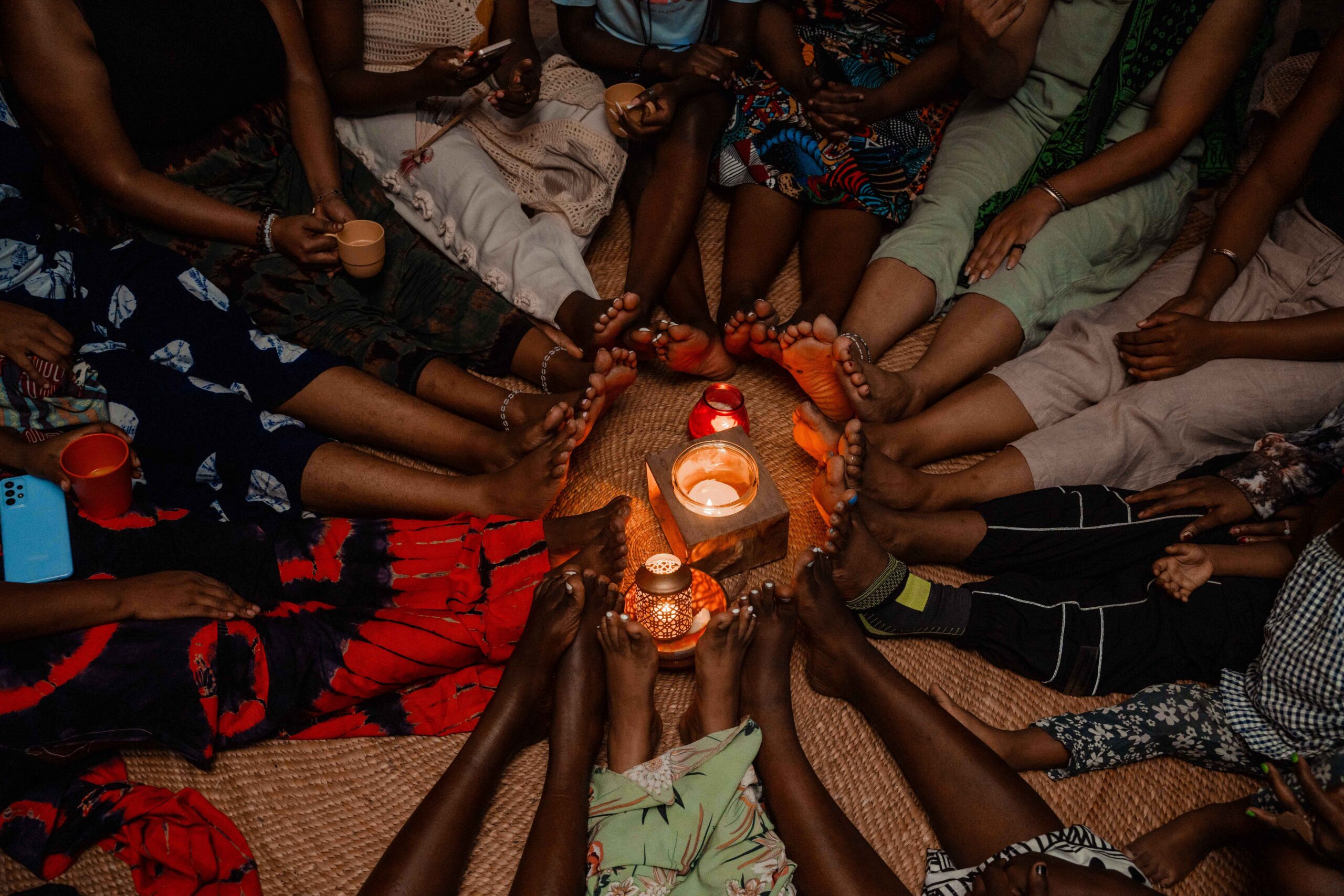
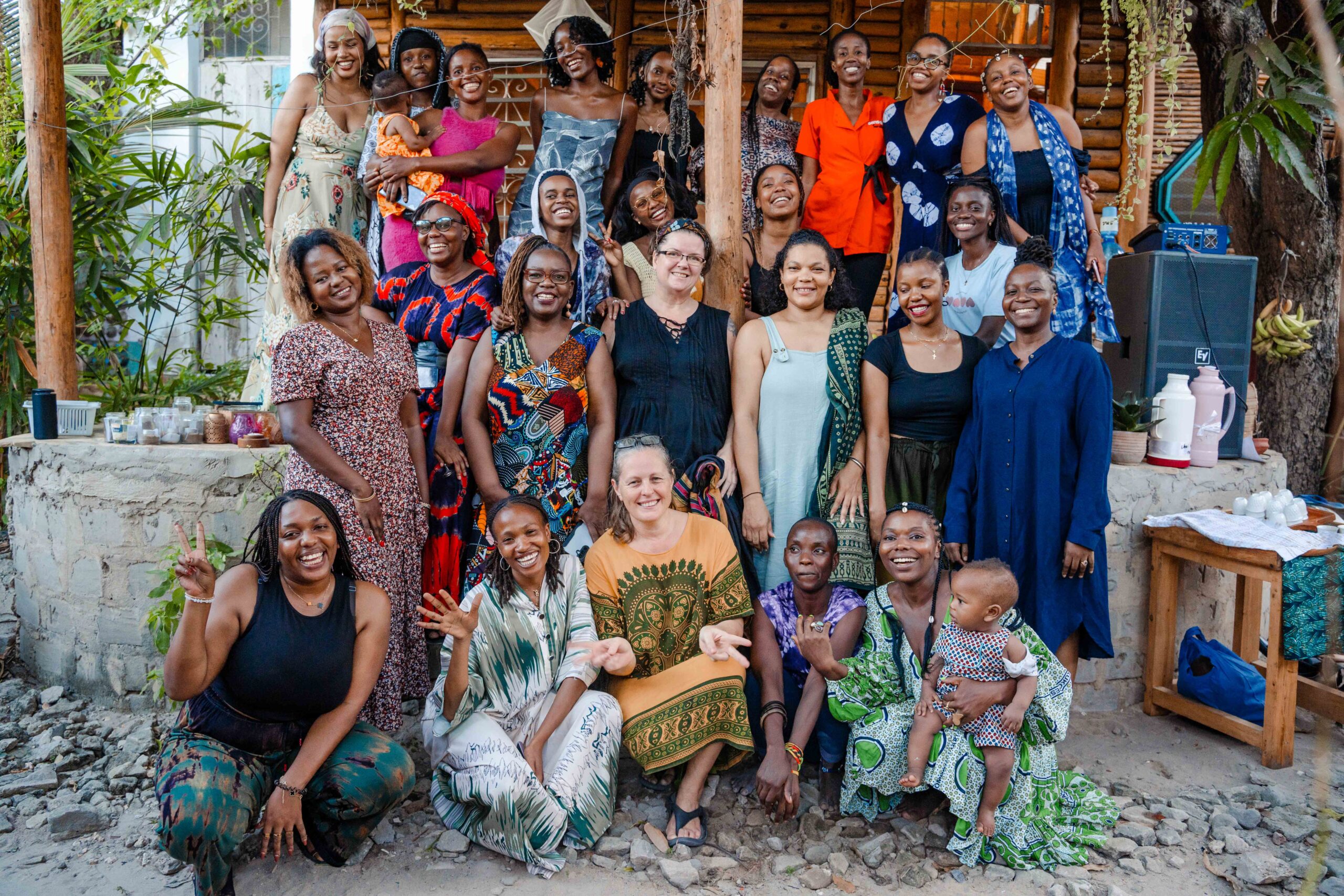
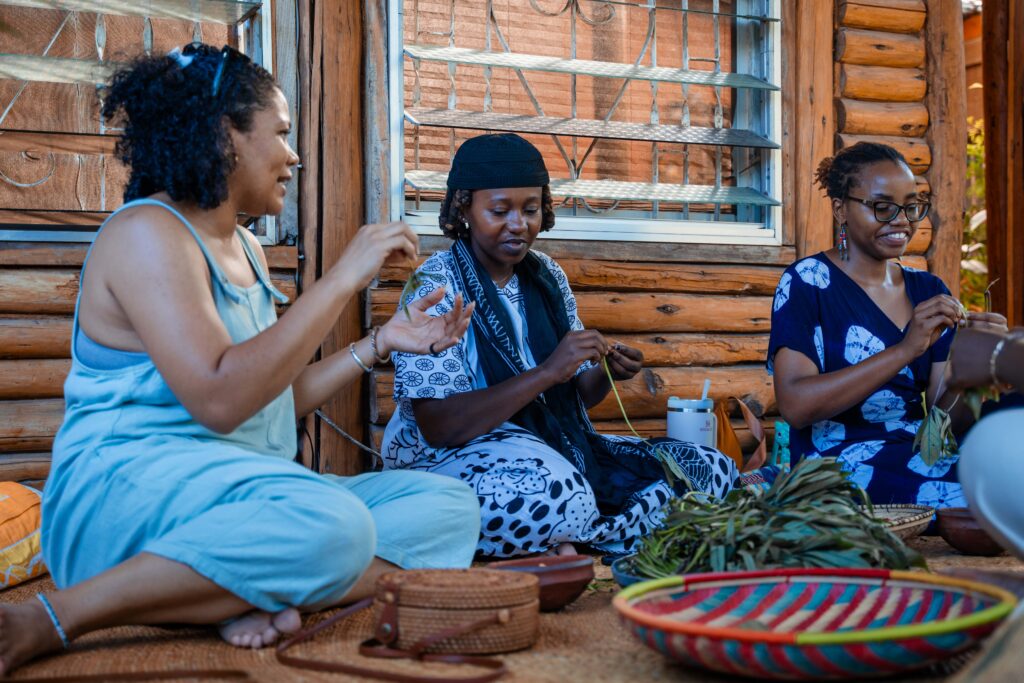
Last week, on 6 December 2025, women creatives from different corners of Dar es Salaam came together for Tunakula Nyumbani, a grounded gathering inspired by the theme “From Hustle to Harmony.” Hosted at Offbabylon, a serene eco-sanctuary away from the noise of the city, the event invited women to pause, soften, and reconnect.
This edition of Tunakula Nyumbani was held under Culture and Development East Africa (CDEA)’s Binti Longa program, as part of the Under the Mango Tree project with Remi Busch. The atmosphere was earthy, quiet, and healing — perfectly aligned with the theme.
A Different Kind of Creative Gathering
This was not a panel discussion.
Not a formal workshop.
Not the usual creative industry hustle.
Instead, it was an invitation to rest, to breathe, bond, cook together, share stories, and reclaim softness as a form of strength.
Women artists reflected on:
- Balancing creativity and wellbeing
- Navigating burnout
- The power of slowing down
- Healing through food, storytelling, and community
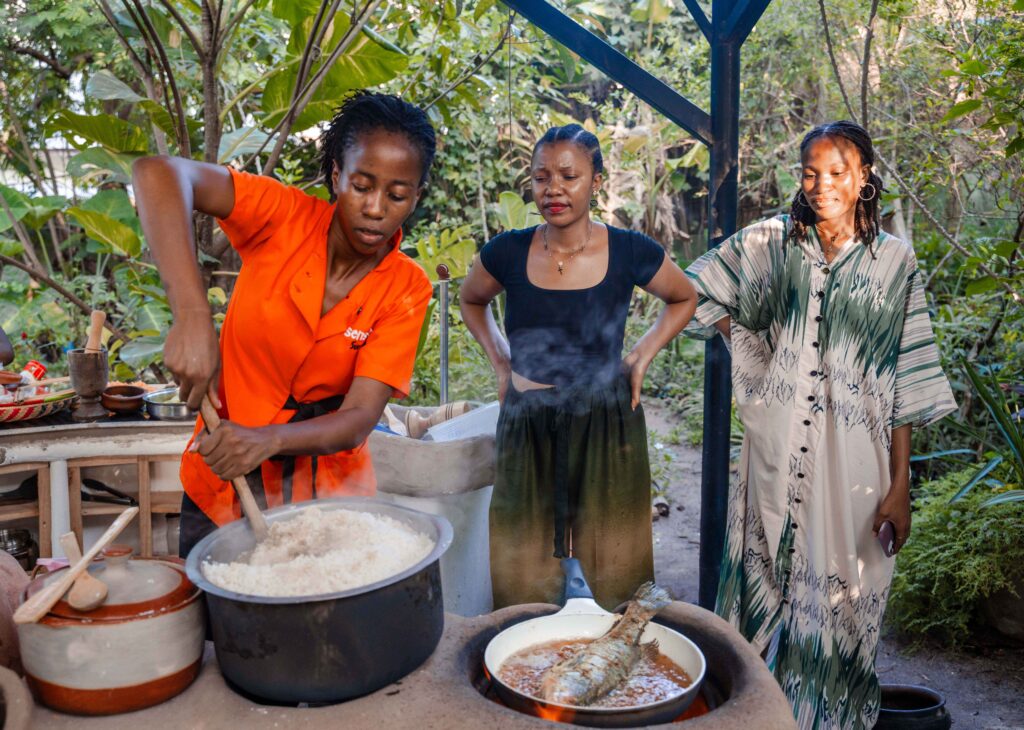
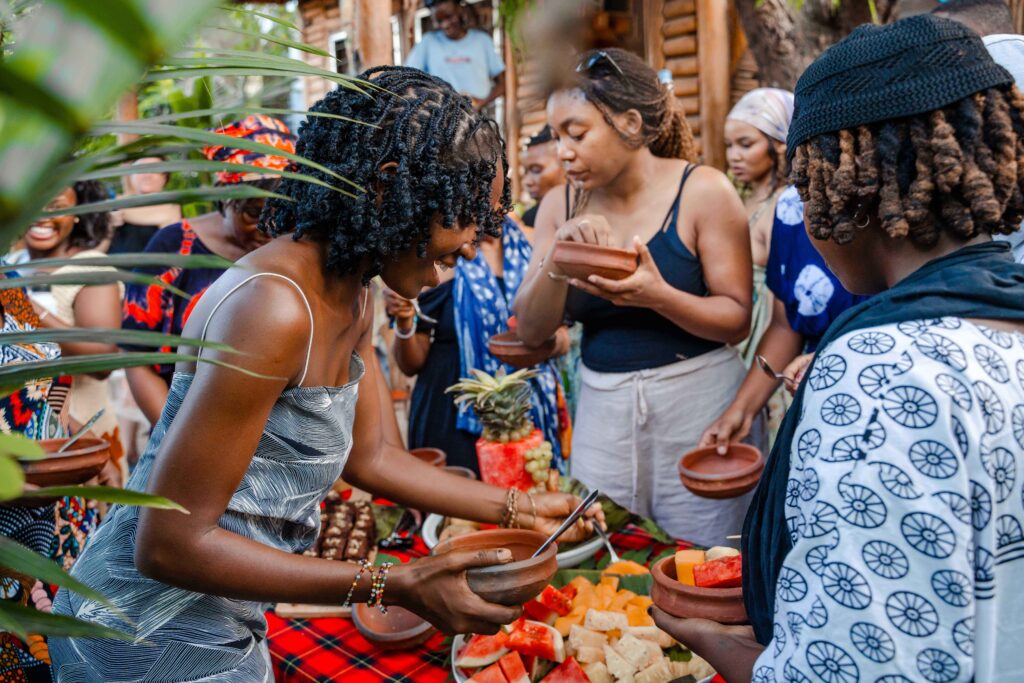
The heart of the gathering was food, prepared together by participants using recipes from Shambani Hadi Sahani, guided by Sensory Swahili’s chief curator and chef, Rhoda Henry.
Each recipe became a moment of connection, reflection, and rediscovery.
What We Cooked & What Each Dish Represented
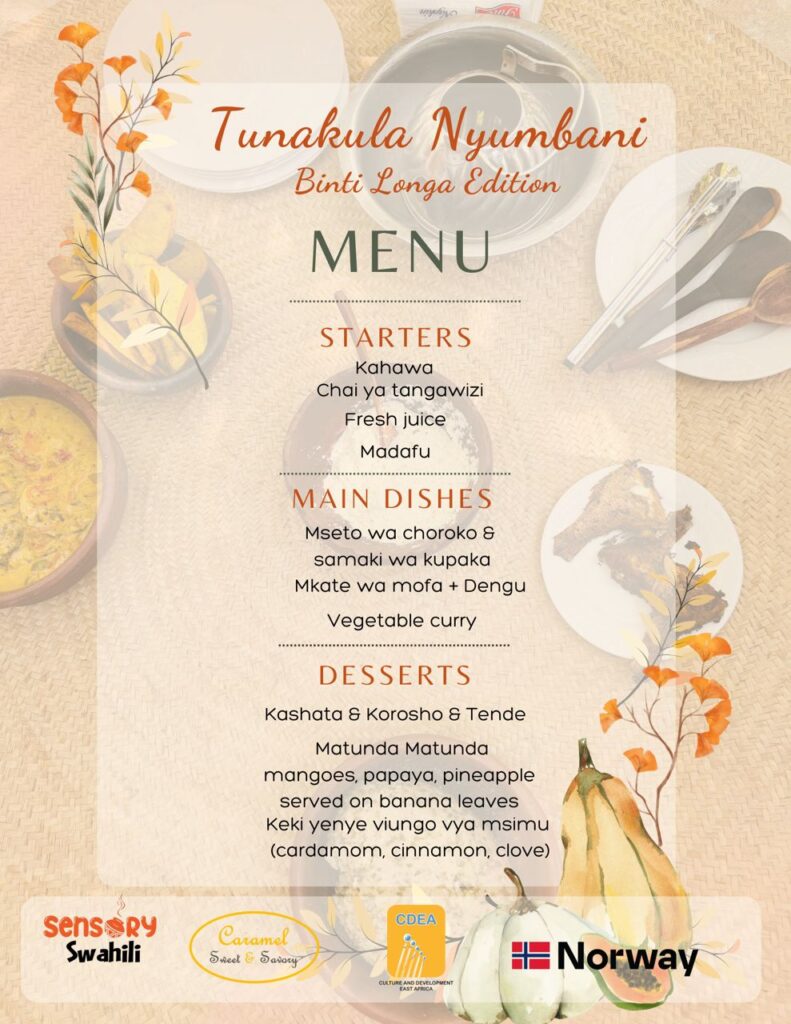
Below are the dishes prepared that day, and the stories, themes, and reflections they carried.
1. Mseto wa Choroko – “Small Seeds, Big Power”
Choroko (mung beans) are tiny, resilient, and nourishing — a perfect metaphor for women creatives.
This dish symbolized:
- Beginnings that look small from the outside
- Seeds planted quietly
- Brands built from nothing
- First ideas sketched on scraps of paper
- Stories grown in hidden corners
Choroko reminded us that small does not mean insignificant.
“Choroko is just a small bean, but it feeds families, strengthens bodies, and survives dry seasons. Like us, women in the creative industry start small, but our impact is powerful and long-lasting.”
2. Samaki wa Kupaka – “Across the Ocean, Across Time”
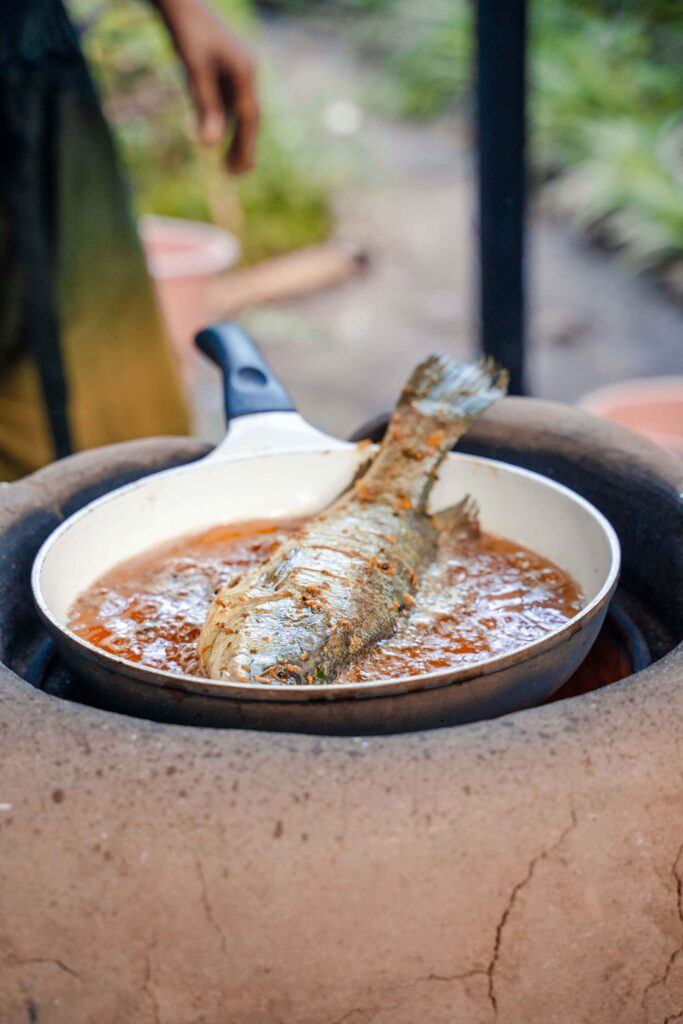
A dish that carries the history of the Indian Ocean; Africa, Arabia, India meeting in one pot.
It highlighted connection and collaboration, especially among women.
It reflected:
- The movement of recipes, rituals, songs
- Cultural exchange across generations
- The richness created when women come together
“Samaki wa kupaka is not just food — it is history, culture, and collaboration. When women creatives come together, we create something richer than ourselves.”
3. Wali wa Iriki – “Patience is a Creative Process”
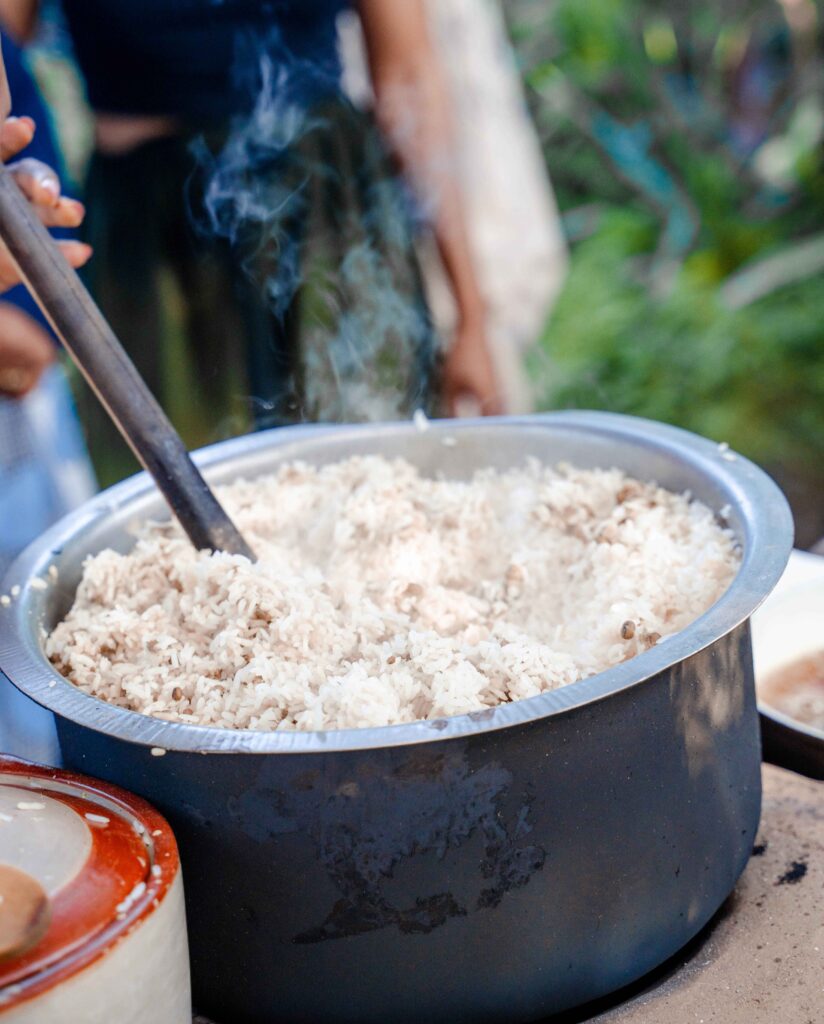
Brown rice takes longer to cook. It requires attention, water, heat, waiting — much like the creative process itself.
This dish represented:
- The slow growth of creative careers
- The need for care and consistency
- Healing and unlearning
- The long journey toward balanced futures
“Wali mweupe ni wa haraka. Lakini wali wa iriki ni wa afya na wa nguvu.” Like our journey as women creatives, it is not fast, but it is full of nutrients and wisdom.”
4. Mchuzi wa Dengu – “Softness is Strength”
Dengu in coconut sauce is creamy, gentle, and nourishing — yet full of protein and strength.
This dish opened a deeper conversation about the power of softness.
It reflected:
- Femininity as strength
- Creating safe spaces
- Healing through food
- Why softness is not weakness, but wisdom
“Dengu become soft when cooked in coconut. Yet they remain strong. Just like us — softness does not diminish our power.”
Stories Shared, Memories Rekindled
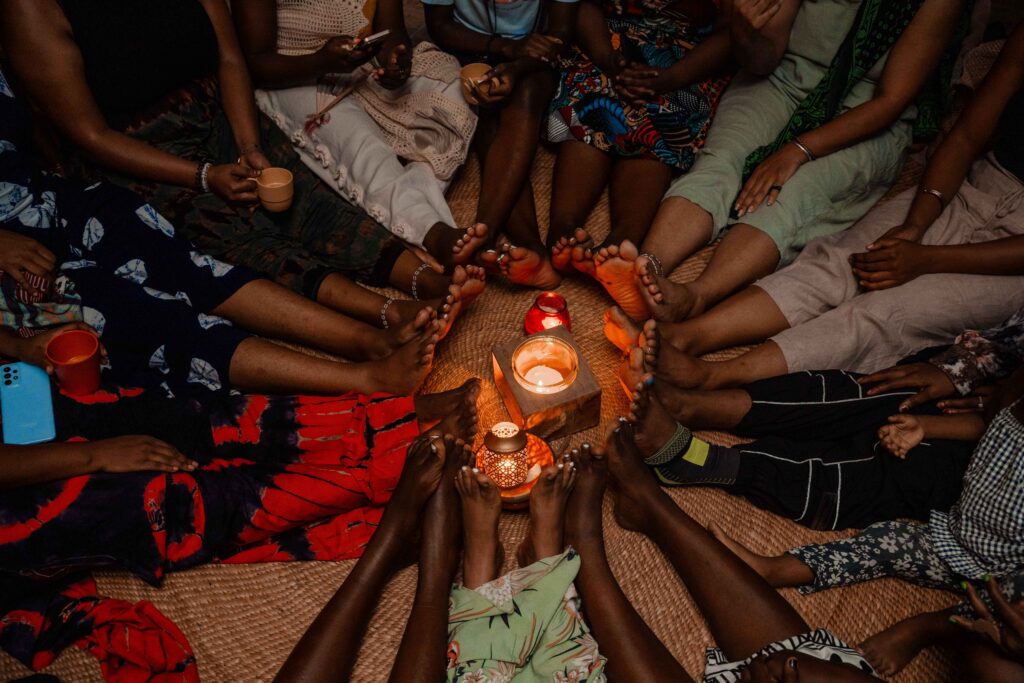
As dishes simmered, participants shared stories from their own kitchens — and their grandmothers’ kitchens. Memories of aromas, rituals, laughter, and lessons passed down generation to generation.
Food became a doorway into:
- Identity
- Ancestry
- Survival
- Creativity
- Womanhood
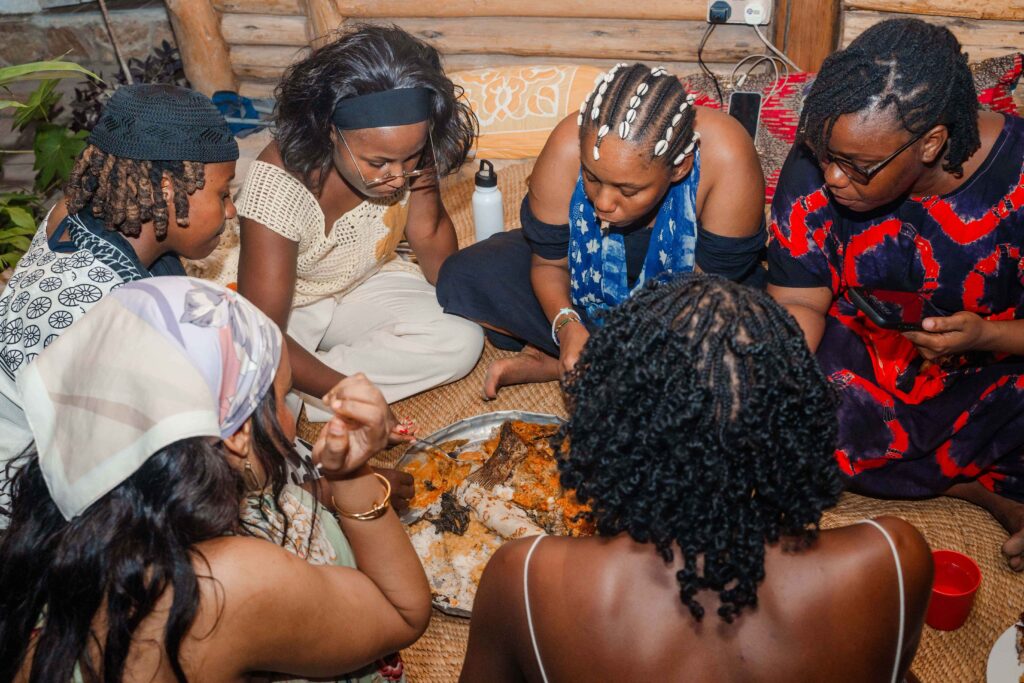
It was a moment to remember that rest is as important as creating.
Closing Reflection
Tunakula Nyumbani reminded us that creativity is not only built in studios, stages, and screens — but also in kitchens, around fires, and in shared meals.
That rest is productive.
That softness is generative.
And that when women creatives come together, they build futures rooted in resilience, nourishment, and harmony.
Special thanks
To all the partners who made this grounded gathering a possibility, Culture and Development East Africa (CDEA) funded by Norwegian Embassy-Tanzania, Offbabylon, Caramel Sweet & Savory and the Sensory Swahili donors that funded the Shambani Hadi Sahani AR Cookbook including; Braid Arts & Culture Fund under the Trust for Indigenous Culture & Health (TICAH), British Council Tanzania and Goethe Institut Tanzania.
Asante sana.
Leave a Reply